My buddy Mark sent me a copy of an email he's been getting saying "PROTECT YOUR RIGHT TO VOTE," vote Yes of Proposition 16. It's a fraud, folks. It is funded by Pacific Gas & Electric Company. PG&E wants you to approve a California Constitution Amendment to require two-thirds vote in your local community if your community wants to develop new sources of electricity, such as through Community Choice Aggregation (CCA) Program. Your community could, then, get cheaper electricity through the CCA.
But, if you approve Proposition 16, you will forever have to have two-thirds of your voters approve new electricity needs for your community. If you can't, you have to get your electricity from Pacific Gas & Electric, at their price. It is very difficult, if not impossible, to get two-thirds approval for anything.
This proposition is not about democracy. It's about forcing PG&E down your throats.
Dave
Wednesday, April 28, 2010


We Give Credit Rating Companies and Big Banks Way Too Much Credit
Let me see if I can follow this trail. In this article, Stocks slump as Greece debt downgraded to junk, Standard & Poor's "dismissed the suggestion that its announcement caused [market] turmoil Tuesday" while markets on both sides of the Atlantic took a 2% dump and the two portfolios I try to manage took 3.5% hits. It seems to me that S&P's statement is categorically wrong; the article title is right - "stocks slump as...." John Chambers, S&P's Chairman, says, "Ratings just hold a mirror up to nature. The fate of Greece is in the hands of policymakers." Huh? What the hell does that mean?
Was it only about two years ago that Goldman Sachs rushed to make itself a depository bank so it could stand in line at the Fed window for zero interest government loans? Taxpayer loans? Is my memory accurate on that? If so, you wouldn't have known that by listening to them yesterday. Not one word out of their mouths gave any indication that they were more than an investment bank or that they had any obligation to depositors, like you and me who may have had money in their bank. I didn't, but I hope you get my point. They called themselves a depository bank for the sake of getting free-money government loans, but that didn't change their normal course of business. It appears to be that the normal course of business is actually collusion and corruption in the finance industry, scamming investors and depositors.
Do they mean to tell me that several years ago when Goldman Sachs, etal., scammed Greece into taking a huge loan it couldn't pay back (and they knew it and bet against it) and Goldman helped Greece hide its staggering debt from the European Union that Standard & Poor's investment grade rating at that time was a mirror of nature? How, exactly, was that? A little birdie told them Greece's bonds were investment grade back then?
So, now Chambers absolves himself of any responsibility because the "fate of Greece is in the hands of the policymakers." Nope, he's just a guy doing normal business. Can't blame him.
That's pretty much what we heard from Goldman Sachs executives yesterday as they testified to the Senate Permanent Subcommittee on Investigations after, of course, they rehearsed how to avoid, delay, dance-around and side-step answers. And, when they couldn't delay an answer any longer, they gave technical responses that amounted to, "we were just managing risk when we hedged our bets by shorting CDOs that we sold to investors." There you go. It's just a normal course of business that they sell one thing to investors in one office, leaving out meaningful details in the prospectus, and betting against them in another office down the hall. It's not their problem if the investor didn't get the whole story. Just like it wasn't their problem that the European Union didn't know they were hiding Greece's debt. Is there anyone who doubts that we need finance reform? Only Republicans and Nebraska Senator Ben Nelson, apparently.
Was it only about two years ago that Goldman Sachs rushed to make itself a depository bank so it could stand in line at the Fed window for zero interest government loans? Taxpayer loans? Is my memory accurate on that? If so, you wouldn't have known that by listening to them yesterday. Not one word out of their mouths gave any indication that they were more than an investment bank or that they had any obligation to depositors, like you and me who may have had money in their bank. I didn't, but I hope you get my point. They called themselves a depository bank for the sake of getting free-money government loans, but that didn't change their normal course of business. It appears to be that the normal course of business is actually collusion and corruption in the finance industry, scamming investors and depositors.
Oh well. I know the real problem. The real problem is that I forgot to set aside two cups of coffee for my wife this morning and I, on top of my normal share, inadvertently drank them instead. I'm too wired at the moment to think about this stuff.
Dave
Tuesday, April 27, 2010
Immigration Law Revised
Has anyone else noticed how quickly the history of United States Immigration Law has been revised in the past few days? I'll swear that two days ago this country had immigration laws, but you wouldn't know that this morning. In the past two weeks Arizona made its own immigration law that, according to the Rachel Maddow Show, one of the most factually accurate shows on television, was at least partially written by a racist non-profit Federation for American Immigration Reform (FAIR) organization, and the arguments for immigration laws have moved from "enforcing our laws" to "this country must have immigration laws." And, this morning I hear that Senator Lindsey Olin Graham, Republican of course from South Carolina, has crossed his arms and stuck out his bottom lip, pouting, and said in effect in a whiny, childish voice, "I won't work on the Climate Change legislation until this country has immigration laws." That's breath taking.
And if that wasn't enough, and as a complete show stopper for the Party of "No," Senator Mitch McConnell, Senate Republican Minority Leader from Kentucky, said words to the effect, "This government shouldn't be making immigration laws. That should be left up to the individual states." If Graham's statement was breath taking, McConnell's sucked the oxygen out of the atmosphere. We are now 100% polluted... climate change is complete.
Neither of these idiots know anything about the Federalist Papers that, by the way, explain why our founding fathers created the United States in the first place. In a sentence, they did it TO CREATE A CENTRALIZED GOVERNMENT SO THE STATES WOULDN'T BE GOING WILLY-NILLY DOING THEIR OWN THING. For Christ's sake. Could it be any clearer? The most pressing problem they had after the Revolution, way back then, was that the lose confederation of states, each doing its own thing, creating their own laws, was a mess. PLEASE read the first paper written by Alexander Hamilton. He stated the reason in the first sentence. And, another by the way, Hamilton created our Federal Finance System AND taxes to "sustain the federal government." So, pay your taxes. And, a third by the way, you implicitly agreed to abide by the Constitution when you were born in, or naturalized under our immigration laws by, this country. So, get with it or leave it.
How time flies. Was it only yesterday when I was trying to understand "epistemic closure" as it applied to the Conservative Movement, the GOP, Palin, Limbaugh, Beck and rest of the gang? It is a condition in which valid "knowledge" stops growing because information, influence, beliefs and ideas are false or based on "Bush's gut feelings," and one simply accepts what their told without further research, or information is accepted because, as a Stanford University document suggested, "a warm feeling between the toes." In other words, just because you heard the word "freedom" at the pool hall or the Limbaugh radio show doesn't mean that you know what it means. I suggested that epistemic closure could be described as "brain dead." Brenda suggested an alternative "ignorant" and I agreed that would do too. But, maybe I was a bit hasty. The word ignorant implies that there's a way out. That education cures ignorance. Brain dead, on the other hand, suggests that there is nothing else that can be done, except, of course, voting these idiots out of office. So, I'm going back to my original thought. They're brain dead. Ignorant doesn't explain the phenomena enough. The only solution is to vote them out of office. We could elect a single-cell amoeba and get better results.
And, for God's sake, don't go to Arizona anymore. It doesn't need or deserve our tourist dollars or business, since nobody will be working there anymore. All their laborers will be leaving the state. You won't be waited on if you stop to eat there. Oh, and stop talking about "Irish" immigrants, as I heard someone mention - sort of lumping all immigrants in an illegal pot. In addition to Jose and Jesus, who I think very highly of and who don't need their papers checked, I know an Irish immigrant too, who is a better American than all the Tea Partiers put together. You'll really piss me off if you start picking on him.
Dave
And if that wasn't enough, and as a complete show stopper for the Party of "No," Senator Mitch McConnell, Senate Republican Minority Leader from Kentucky, said words to the effect, "This government shouldn't be making immigration laws. That should be left up to the individual states." If Graham's statement was breath taking, McConnell's sucked the oxygen out of the atmosphere. We are now 100% polluted... climate change is complete.
Neither of these idiots know anything about the Federalist Papers that, by the way, explain why our founding fathers created the United States in the first place. In a sentence, they did it TO CREATE A CENTRALIZED GOVERNMENT SO THE STATES WOULDN'T BE GOING WILLY-NILLY DOING THEIR OWN THING. For Christ's sake. Could it be any clearer? The most pressing problem they had after the Revolution, way back then, was that the lose confederation of states, each doing its own thing, creating their own laws, was a mess. PLEASE read the first paper written by Alexander Hamilton. He stated the reason in the first sentence. And, another by the way, Hamilton created our Federal Finance System AND taxes to "sustain the federal government." So, pay your taxes. And, a third by the way, you implicitly agreed to abide by the Constitution when you were born in, or naturalized under our immigration laws by, this country. So, get with it or leave it.
How time flies. Was it only yesterday when I was trying to understand "epistemic closure" as it applied to the Conservative Movement, the GOP, Palin, Limbaugh, Beck and rest of the gang? It is a condition in which valid "knowledge" stops growing because information, influence, beliefs and ideas are false or based on "Bush's gut feelings," and one simply accepts what their told without further research, or information is accepted because, as a Stanford University document suggested, "a warm feeling between the toes." In other words, just because you heard the word "freedom" at the pool hall or the Limbaugh radio show doesn't mean that you know what it means. I suggested that epistemic closure could be described as "brain dead." Brenda suggested an alternative "ignorant" and I agreed that would do too. But, maybe I was a bit hasty. The word ignorant implies that there's a way out. That education cures ignorance. Brain dead, on the other hand, suggests that there is nothing else that can be done, except, of course, voting these idiots out of office. So, I'm going back to my original thought. They're brain dead. Ignorant doesn't explain the phenomena enough. The only solution is to vote them out of office. We could elect a single-cell amoeba and get better results.
And, for God's sake, don't go to Arizona anymore. It doesn't need or deserve our tourist dollars or business, since nobody will be working there anymore. All their laborers will be leaving the state. You won't be waited on if you stop to eat there. Oh, and stop talking about "Irish" immigrants, as I heard someone mention - sort of lumping all immigrants in an illegal pot. In addition to Jose and Jesus, who I think very highly of and who don't need their papers checked, I know an Irish immigrant too, who is a better American than all the Tea Partiers put together. You'll really piss me off if you start picking on him.
Dave
Monday, April 26, 2010
If I could see into the future...
...I would have known ten days ago that the U.S. to sell 1.5 bln Citi shares in first round - MarketWatch (Symbol: C) of common stock today, so that I would have waited to buy it after the U. S. Treasury drove the price down - so that I will gain more when it goes back up. If only - so that. Oh well. I'll wait.
Dave
Sunday, April 25, 2010
My New Heroes - Margaret and Helen
Sometimes I come across or I'm referred to a book, an article, an opinion, a magazine, a blog or some kind of media that reminds me that all I'm doing is "trying," and not making any real headway. My editor, the "other" Dave, has problems with English grammar, word selection, dyslexia, phonetic issues, etc. My paragraphs are not whole, or are too "whole." Wrong subjects. Wrong conclusions. Or, simply nonsense that, after a little thought, I would retract or write differently.
So, sometimes I see a better way and I try to change, to follow a style and perhaps be better. But, this blog by Margaret and Helen can't be beat. It is unique and I have to say that it's perfect. So, I'm going to continue to do my best, but I'm going to spend a lot of time reading Margaret and Helen.
Thanks, Brenda, for sharing this blog. Love it. It goes to the top of my blog list.
Dave
Saturday, April 24, 2010
Following the Russians - USS Lockwood FF-1064 And The William Tell Overture
This story, China Expands Naval Power to Waters U.S. Dominates - NYTimes.com, reminds me of following the Russians while on the USS Lockwood, between 1975 and 1978. China says it's building up its Navy for defensive purposes, of course, to protect its sea lanes in Southeast Asia and the Middle East. Every country says they do these things for defensive purposes. But, it's not. There are no modern weapons for defensive purposes, they are all for offense. That's where the deterrent is. If we're not already, we'll be following the Chinese too. It was the same during the Cold War while I was aboard the USS Lockwood.
I've said before that "nothing happened" on that ship, but that was only in the context of writing about dangerous ships I've been on. Something always happened. The Lockwood was a relatively modern ship in 1975, sporting the Battle "E," for Battle Excellence, on its bridge and with an array of impressive weapons, from an automated five-inch gun to guided cruise missiles and torpedoes and the dreaded Phalanx gun. The ship was built for dual purposes, both anti-submarine and surface warfare, and it had a helicopter that could handle "over-the-horizon" targeting. The Battle "E" said we were good at our job, too. But, it's odd that with all the missiles that gave us the ability to shoot from a good distance, that it was the relatively small 20mm Phalanx that we cared most about. You can get an official and more technical description of the Phalanx on Wikipedia, here.
But, you'll probably understand my description better. The Phalanx was a fully automated Gatling gun that could fire so many 20mm rounds, 3,000 per minute, in close combat that not much could get through or close to us without being blown to bits. It could literally "saw" off the top of an approaching ship's conning tower in seconds. It could also shoot down any incoming missile. The only way to defeat it was for an enemy ship to fire ten or more missiles at us, and even then the Phalanx could destroy most of those. So, it was a big deal to us. It allowed us to follow the Russians with a degree of confidence that we were safe or at least could handle anything they threw at us. And, that's what we did; we followed the Russians after the end of the Vietnam War in April, 1975. We followed both surface ships and submarines.
We searched for and found submarines with two sonar systems, one attached to our hull and the other we lowered into the water to depths of six or seven hundred feet, our variable depth sonar (VDS). The VDS allowed us to find those submarines that tried to run silent beneath the Thermocline, an inversion layer in the ocean, or any deep body of water, that distorts sound. The Thermocline is a relatively thin layer of water between the top warmer, rougher water and the colder, calmer water below. To our hull sonar, a submarine running below that layer could be miles away but sound like it was only a mile away or vice versa, a mile away but sound ten miles away. Sometimes we couldn't hear them at all through the layer by using only our hull sonar. But, the VDS could listen below that layer and pinpoint a submarine relatively quickly. We would wait for a submarine leaving Vladivostok, Russia, on the western coast of the Sea of Japan and track it for hundreds of miles.

But, the Thermocline was a problem, too, because we were on top of it - in the rough water while that submarine was moving along nicely, in relative comfort. Once in a cold, winter storm in the Sea of Japan, while listening for subs, our VDS cable jumped out of its pulley. Here is a picture of a VDS similar to the Lockwood's. You may be able to see the problem. The VDS is housed in a cage inside the ship, so if the cable becomes loose in rough seas, it has a tendency to flop around inside that cage and entangle itself around several pieces of equipment. It's like throwing out a three or four ton fishing line and then trying to thread the line on to the reel. Then, too, the ship cannot move forward when the cable is loose and there's nothing worse in rough water than having to stay in one spot. Staying in one spot makes the waves just that much bigger.
So it was on that day, when the waves were at least 20 feet high and were crashing through our open VDS door and the water was near freezing, that we had to stop the ship to see if we could get the VDS cable back on its track so we could continue sub searching. Some of the crew were getting seasick, a condition that is both nausea and dizziness and one has no sense of up or down, left or right. The ship was bobbing and rocking like a cork. I went aft to see if I could help, but I immediately saw that I couldn't. The Commanding Officer, Executive Officer and Senior Chief Sonar Tech Bob Bolin were in the cage trying to push the cable onto the pulley as the ship rolled and bobbed. There was only room enough for three people in the cage at best times. It was very crowded in the cage with the loose cable and waves crashing through the back door. As the aft went down, the cable loosened somewhat and, gauging the opportunity, they pushed the cable toward the pulley. As the aft went up, the cable tightened and they stood back to avoid being trapped beneath it. They tried that for nearly an hour. Cutting the cable wasn't an option. That would mean an inquiry, losing the Battle E, and probably meant our Commanding Officer would lose his job. The VDS was a multi-million dollar piece of equipment and losing it would not sit well with Pacific Fleet. Finally, the movement of the ship, the cable and the waves came together perfectly and the cable flipped into place on the pulley on its own. Pure luck. We didn't lose the VDS, but there was enough damage in the VDS cage that it couldn't be used until it was repaired on our next Yokosuka in-port period.
In 1975 the ship had a "Theme Song" contest to choose the song we would play at appropriate times, such as underway replenishments when coming alongside an oiler or supply ship or entering our home port, Yokosuka, Japan. The crew was to vote on the nominated songs. One of the songs suggested was the "William Tell Overture," the theme song for the Lone Ranger of the 1950s and '60s. As a Department Chief Petty Officer, and since I had good communications with most of the crew, I knew the crew would not choose that song. "Midnight Special," by Creedence Clearwater and "Already Gone" and "Take it Easy" by the Eagles were my favorites, with a preference for "Already Gone." Black crew members nominated the "Soul Train Theme Song," by the Soul Train Gang, but it wasn't lively enough, I thought. We needed, I thought, a heavy metal or heavy rock sound - something loud. I can hear it now, "I'm already gone. I'm feeling strong. I'll will sing this victory song... The letter that you wrote me..." Wow, what a good theme song! Imagine that song playing when crashing through the waves, bow breaching, the sun shining and the sea a dark blue with white caps frothing, and the ship close by envious of our theme song! That's bravado! Alas, according to the Commanding Officer, "William Tell Overture" won the contest. Almost immediately we heard, "The voting was rigged!" from sailors all over the ship. Or, "What a dorky song. That's embarrassing." It was, never the less, from that day forward, our theme song. But, there came a day that we were happy with our theme song, because it was recognized the world over while the others we might have chosen were not.
A year or so later the Lockwood was tasked to trail a task force of Russian ships in the South China Sea. It took us several days to catch them. I'm sure they could see us on radar long before they saw our ship, but I think we saw them first, both on radar and by sight. As we approached them from under the horizon, we saw a plum of black smoke on the horizon in front of us. The word spread that a Russian ship was approaching at full speed, so many of us went topside to watch. But, all we saw was the black smoke on the horizon. It turned out that the propulsion system on their ships was pretty antiquated, a combination of diesel and steam which, when moving at their highest speed, belched black smoke out of the stack like an old locomotive. The Lockwood's propulsion system was a modern 1200 pound per square inch steam turbine system that gave out some smoke a minute or so on going to full speed, but as fuel and speed settled, the smoke dissipated. We saw them coming a long way off. The Russian ship, a guided missile cruiser I believe, wasn't going to ram us, of course, so we held our course and speed. We passed each other, and waved to each other, with a little less than a hundred feet between us. Then, we settled in watching their operations.
The black smoke was the source of humor on the Lockwood and most of the crew, especially the chiefs, began thinking that we had nothing to fear from the Russian Navy. We would prevail in any battle. That point was brought home again when we watched their underway refueling. In fact, we thought the method they used was funny. Perhaps they saw us laughing on the main deck. Maybe that pissed them off.
Our method of refueling involved pulling along side the oiler (loud speakers playing our song), about thirty or forty yards between ships, and we usually kept good speed, about twenty miles an hour. (Speakers off) The oiler shot a "shot-line" over to us that was attached to a larger rope, and we pulled that across and hooked the rope to a padeye. Then came the five or six-inch hose across on pulleys that we connected to the fuel receiving valve. The hose was hoisted high on the oiler on a boom, and once the fuel began flowing, the hose became a siphon and the vacuum helped speed the oil flow. We turned on the valve and received the oil. The whole thing took us about 30 minutes and we were gone, speakers on, on our way. There was a big advantage to doing it this way. First, it was important to maintain speed and both ships could go faster, if necessary, to avoid any hostile ships in the area. Also, we didn't look like we were refueling on radar. With two ships that close, we just looked like a larger ship. Second, we could disconnect everything within seconds and both ships could escape in different directions, if necessary.
But, the Russians had a different method. The Russian oiler slowed to a crawl and let out about one hundred feet of the refueling hose to trail behind, floating on the water. The ship getting the fuel pulled up to the end of the hose and sailors on the bow of the ship tried to hook the hose. It took about twenty minutes just to hook the hose. Then the sailors hoisted the heavy hose to the main deck, approximately twenty-five feet and pulled it to the valve and then began taking on fuel. Since the hose was lower than both ships, the fuel pump on the oiler had to work harder to push the oil and, therefore, took longer to fuel the ship. The whole refueling exercise took approximately two to three hours per ship. Meanwhile, we watched, waved, took pictures and laughed occasionally. Their method was so archaic that someone suggested that they were deceiving us, hiding their true method of refueling. But, the more we watched, the more we were convinced that we were watching the real thing.
After nearly a full day of watching them refuel and, whether the Russian cruiser captain was angry at our laughing, or wanted to show off or to play, we saw the cruiser come up to full speed, black smoke rolling. It made a hard right turn to our rear and then a hard left turn to come up behind us, straight at our fantail. We increased speed, but stayed below full speed as the cruiser approached. In the last minute, within thirty yards of our fantail, it swerved to the left to come up along our port side. We, then, increased to full speed, about thirty-two mph, but the Russian was a mile or two faster and came along side, near enough for sailors on both ships to see each others' faces clearly and to see the concern that we were getting too close for comfort.
How close was he? Probably not much closer than the first time he passed us. My memory is faulty about that. It's like a fish story. The more it's told, the bigger the fish gets. I don't believe either captain wanted to create an international incident, so that line wasn't crossed, unless you consider that the Lockwood being in the area in the first place might be crossing that line. Both ships held a steady course. Then, to the surprise of sailors on both ships, the William Tell Overture began playing over our loud speakers. They knew the song as well as or better than we did, since it was written in Europe for the 1839 "William Tell Opera." Several sailors on the cruiser gave a thumbs up, a sign of appreciation. Everyone on both ships had a good laugh. Gradually, both ships pulled away from the other and we went back to watching each other. We didn't arm the Phalanx for that encounter.
We appreciated the song more, after that. I wonder if Chinese sailors will know the song. Of course, unlike the Russian ships, the Chinese ships will be as new or newer than ours. Let's hope a song makes a difference.
Hi-yo Silver, away...
Dave
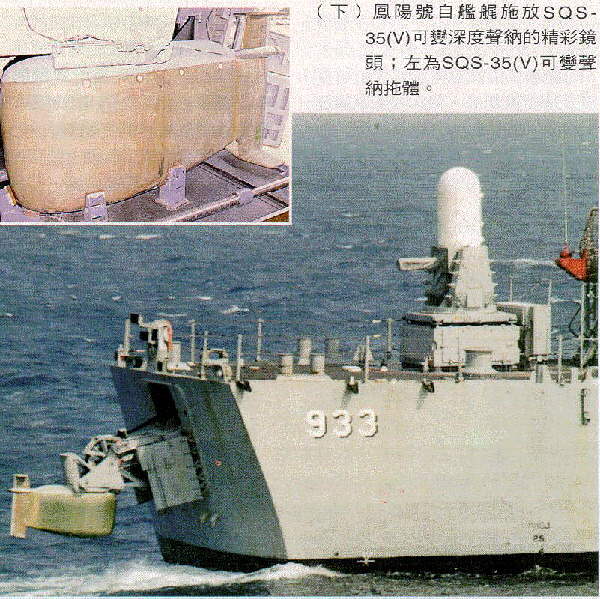
So it was on that day, when the waves were at least 20 feet high and were crashing through our open VDS door and the water was near freezing, that we had to stop the ship to see if we could get the VDS cable back on its track so we could continue sub searching. Some of the crew were getting seasick, a condition that is both nausea and dizziness and one has no sense of up or down, left or right. The ship was bobbing and rocking like a cork. I went aft to see if I could help, but I immediately saw that I couldn't. The Commanding Officer, Executive Officer and Senior Chief Sonar Tech Bob Bolin were in the cage trying to push the cable onto the pulley as the ship rolled and bobbed. There was only room enough for three people in the cage at best times. It was very crowded in the cage with the loose cable and waves crashing through the back door. As the aft went down, the cable loosened somewhat and, gauging the opportunity, they pushed the cable toward the pulley. As the aft went up, the cable tightened and they stood back to avoid being trapped beneath it. They tried that for nearly an hour. Cutting the cable wasn't an option. That would mean an inquiry, losing the Battle E, and probably meant our Commanding Officer would lose his job. The VDS was a multi-million dollar piece of equipment and losing it would not sit well with Pacific Fleet. Finally, the movement of the ship, the cable and the waves came together perfectly and the cable flipped into place on the pulley on its own. Pure luck. We didn't lose the VDS, but there was enough damage in the VDS cage that it couldn't be used until it was repaired on our next Yokosuka in-port period.
In 1975 the ship had a "Theme Song" contest to choose the song we would play at appropriate times, such as underway replenishments when coming alongside an oiler or supply ship or entering our home port, Yokosuka, Japan. The crew was to vote on the nominated songs. One of the songs suggested was the "William Tell Overture," the theme song for the Lone Ranger of the 1950s and '60s. As a Department Chief Petty Officer, and since I had good communications with most of the crew, I knew the crew would not choose that song. "Midnight Special," by Creedence Clearwater and "Already Gone" and "Take it Easy" by the Eagles were my favorites, with a preference for "Already Gone." Black crew members nominated the "Soul Train Theme Song," by the Soul Train Gang, but it wasn't lively enough, I thought. We needed, I thought, a heavy metal or heavy rock sound - something loud. I can hear it now, "I'm already gone. I'm feeling strong. I'll will sing this victory song... The letter that you wrote me..." Wow, what a good theme song! Imagine that song playing when crashing through the waves, bow breaching, the sun shining and the sea a dark blue with white caps frothing, and the ship close by envious of our theme song! That's bravado! Alas, according to the Commanding Officer, "William Tell Overture" won the contest. Almost immediately we heard, "The voting was rigged!" from sailors all over the ship. Or, "What a dorky song. That's embarrassing." It was, never the less, from that day forward, our theme song. But, there came a day that we were happy with our theme song, because it was recognized the world over while the others we might have chosen were not.
A year or so later the Lockwood was tasked to trail a task force of Russian ships in the South China Sea. It took us several days to catch them. I'm sure they could see us on radar long before they saw our ship, but I think we saw them first, both on radar and by sight. As we approached them from under the horizon, we saw a plum of black smoke on the horizon in front of us. The word spread that a Russian ship was approaching at full speed, so many of us went topside to watch. But, all we saw was the black smoke on the horizon. It turned out that the propulsion system on their ships was pretty antiquated, a combination of diesel and steam which, when moving at their highest speed, belched black smoke out of the stack like an old locomotive. The Lockwood's propulsion system was a modern 1200 pound per square inch steam turbine system that gave out some smoke a minute or so on going to full speed, but as fuel and speed settled, the smoke dissipated. We saw them coming a long way off. The Russian ship, a guided missile cruiser I believe, wasn't going to ram us, of course, so we held our course and speed. We passed each other, and waved to each other, with a little less than a hundred feet between us. Then, we settled in watching their operations.
The black smoke was the source of humor on the Lockwood and most of the crew, especially the chiefs, began thinking that we had nothing to fear from the Russian Navy. We would prevail in any battle. That point was brought home again when we watched their underway refueling. In fact, we thought the method they used was funny. Perhaps they saw us laughing on the main deck. Maybe that pissed them off.
Our method of refueling involved pulling along side the oiler (loud speakers playing our song), about thirty or forty yards between ships, and we usually kept good speed, about twenty miles an hour. (Speakers off) The oiler shot a "shot-line" over to us that was attached to a larger rope, and we pulled that across and hooked the rope to a padeye. Then came the five or six-inch hose across on pulleys that we connected to the fuel receiving valve. The hose was hoisted high on the oiler on a boom, and once the fuel began flowing, the hose became a siphon and the vacuum helped speed the oil flow. We turned on the valve and received the oil. The whole thing took us about 30 minutes and we were gone, speakers on, on our way. There was a big advantage to doing it this way. First, it was important to maintain speed and both ships could go faster, if necessary, to avoid any hostile ships in the area. Also, we didn't look like we were refueling on radar. With two ships that close, we just looked like a larger ship. Second, we could disconnect everything within seconds and both ships could escape in different directions, if necessary.
But, the Russians had a different method. The Russian oiler slowed to a crawl and let out about one hundred feet of the refueling hose to trail behind, floating on the water. The ship getting the fuel pulled up to the end of the hose and sailors on the bow of the ship tried to hook the hose. It took about twenty minutes just to hook the hose. Then the sailors hoisted the heavy hose to the main deck, approximately twenty-five feet and pulled it to the valve and then began taking on fuel. Since the hose was lower than both ships, the fuel pump on the oiler had to work harder to push the oil and, therefore, took longer to fuel the ship. The whole refueling exercise took approximately two to three hours per ship. Meanwhile, we watched, waved, took pictures and laughed occasionally. Their method was so archaic that someone suggested that they were deceiving us, hiding their true method of refueling. But, the more we watched, the more we were convinced that we were watching the real thing.
After nearly a full day of watching them refuel and, whether the Russian cruiser captain was angry at our laughing, or wanted to show off or to play, we saw the cruiser come up to full speed, black smoke rolling. It made a hard right turn to our rear and then a hard left turn to come up behind us, straight at our fantail. We increased speed, but stayed below full speed as the cruiser approached. In the last minute, within thirty yards of our fantail, it swerved to the left to come up along our port side. We, then, increased to full speed, about thirty-two mph, but the Russian was a mile or two faster and came along side, near enough for sailors on both ships to see each others' faces clearly and to see the concern that we were getting too close for comfort.
How close was he? Probably not much closer than the first time he passed us. My memory is faulty about that. It's like a fish story. The more it's told, the bigger the fish gets. I don't believe either captain wanted to create an international incident, so that line wasn't crossed, unless you consider that the Lockwood being in the area in the first place might be crossing that line. Both ships held a steady course. Then, to the surprise of sailors on both ships, the William Tell Overture began playing over our loud speakers. They knew the song as well as or better than we did, since it was written in Europe for the 1839 "William Tell Opera." Several sailors on the cruiser gave a thumbs up, a sign of appreciation. Everyone on both ships had a good laugh. Gradually, both ships pulled away from the other and we went back to watching each other. We didn't arm the Phalanx for that encounter.
We appreciated the song more, after that. I wonder if Chinese sailors will know the song. Of course, unlike the Russian ships, the Chinese ships will be as new or newer than ours. Let's hope a song makes a difference.
Hi-yo Silver, away...
Dave
Tuesday, April 20, 2010
Bonus by The Numbers
I remember getting bonuses and stock options at the last two companies I worked for, if we met our numbers. My last company was better at that than the former one was. The bonus I received was usually around 10% of my salary. The “ numbers,” though, were always a mystery to me. What numbers? Was it simply being profitable? Or, did we have to “beat the street?” Beating the street is when we did better than Wall Street analysts predicted, as if they knew anything. They were never right. I also wish I had kept those first stock options I received when the stock price was real low. I would now have a good sized chunk of change. But, I spent it.
Take Goldman Sachs, for example. Analysts predicted that its revenue would be around $10 billion in its first quarter of 2010. Well, it released its 2010 Quarterly (Q1) financial statements today and its revenue came in at $12.78 billion, way above analysts' estimates. I guess that means big bonuses, and that appears to be the case. The first thing that grabs me is the size of the amount set aside for staff compensation, i.e., bonuses and presumably salaries and benefits, $5 billion according to this article, a whopping 39% of total revenue. The next thing that's surprising is that at around $161.00 per share, Goldman's stock is cheap since it is only 6 or 7 times earnings, depending on where you get your stock quote. If Goldman's P/E ratio was around the industry average, approximately 22.7, the stock price would be around $570. So, if you bought 100 shares, you could expect to turn your $16,100 into $57,000 in a relatively short time. That's tempting. It's also a good time for Goldman to get the stock option letters ready so they can be sent to select employees when the stock price hits a low point. If the CEO gets one million shares, he can make $410 million over the next year or so, assuming he can exercise the options. Companies always take advantage of low stock prices to issue those stock option letters.
Item | Value | Note |
| Revenue | $12.78 Billion | 1 st Quarter 2010 |
| Number of Employees | 32000 | |
| Revenue per Employee | $1,597,500.00 | Annualized |
| Industry Avg Rev/Employee | $935,035.00 | As of 12/31/09 |
| Compensation set aside | $5 Billion | 1 st Quarter |
| Compensation per Employee | $156,250.00 | |
| Compensation/Revenue | 39.12% | |
| Net Income | $3.3 Billion | |
| Net Income/Revenue | 42.42% | Revenue less Compensation |
| Shares Outstanding | 526.3 Million | |
| Earnings Per Share (EPS) | $6.27 | 1 st Quarter 2010 |
| Stock Price | $161.00 | |
| Price to Earnings Ratio (P/E) | 6.48 | Annualized |
| Gross Profit Margin | 80.29% | |
| Operating Profit Margin | 38.37% | |
| Net Profit Margin | 25.90% |
The compensation set aside from the first quarter gives each employee $156,250. That's probably close to the average Goldman salary. So, the compensation taken out of this coming quarter needs to cover benefits, probably another 30% of salaries, and after that it's all gravy – bonuses.
But, the SEC civil suit is likely to encourage the Royal Bank of Scotland (RBS) to sue as well, since it was the biggest loser, $841 million, in the Abacus deal. Then there is IKB Industrial Bank of Germany. Britain and Germany had to bail out those banks, so those countries may be in line to sue Goldman or worse. So, Goldman doesn't yet know whether it's better to settle or fight, although it says it's going to fight. It would be a good time to be a fly on the boardroom wall for the final answer: Will the stock price go lower? Or higher? It's too soon to tell. I think it will go lower, so hold off on buying it, if your conscious will allow you to buy it at all.
But, the numbers sure look good. It looks like Goldman is going for a record bonus year, at least 25% above its past five years, not counting 2008 when it apparently had a very low year. The average labor cost for 2006 through 2009, excluding 2008, was $15.9 billion, 25% of the average revenue of $65.6 billion per year. At $5 billion per quarter this year, it will exceed the average labor cost by $5 billion for the year.
Then there are those enormous profit margins and those are only the numbers from 2009. What would the gross profit margin (GPM) be if the first quarter of 2010 is included? I can't get my mind around an 80.29% GPM when $5 billion are retained for compensation. There's something obscene about that. It looks too much like greed to me.
Dave
Subscribe to:
Posts (Atom)